

The best business bank accounts in Germany differ depending on whether you are a freelancer or a GmbH founder. In this article, you’ll find the main options compared by features, requirements and business type.
Best Banks to Open a Business Account: 2026 Comparison
Important: Not all providers listed below are licensed banks. Some operate as payment institutions or electronic money institutions. This distinction may affect deposit protection, how customer funds are safeguarded, and which banking services are available. Always check the provider’s current regulatory status and the protection applicable to your account before applying.
| Provider | Cost per month | Best for | Expat eligibility | Business types | GmbH/UG in formation | IBAN | Provider type | Main limitation |
| Finom | Freelancers: from €0; business: from €7/month annually | Foreign founders, freelancers, SMEs | Eligible foreign residents, if residency requirements are met | Freelancer, sole trader, GmbH, UG, GbR, oHG, AG | Yes | German IBAN | Electronic money institution | Residence/KYC requirements |
| Qonto | Freelancers/sole traders: Starter €0; companies: Basic from €9/month annually, excl. VAT | GmbH/UG founders and growing businesses | Foreign-owned companies may be eligible, subject to supported countries and legal forms | Freelancer, sole trader, GmbH, UG, GbR | Yes | German IBAN | Payment institution | Some business activities excluded |
| Vivid Business | Freelancers: from €0; business: from €0 | International founders and digital businesses | Director residence: EEA, Hong Kong, Serbia, Singapore, Switzerland, UAE or UK | Freelancer, sole trader, GmbH, UG, GbR, oHG | Yes | German IBAN | Electronic money institution | Founder Accounts limited to GmbH/UG i.G. with stricter ID rules |
| N26 Business | Freelancers: from €0; business: from €0 | Expat freelancers | Foreign applicants possible | Freelancer/self-employed | No | German IBAN | Bank | Freelancers only; company accounts still in early access |
| Revolut Business | From €10/month | International incorporated businesses | EEA or US physical presence; more options for US companies | GmbH, UG, GbR, oHG, AG | No | Lithuanian IBAN | Bank | Incorporated companies only; Lithuanian IBAN in Germany |
- Best for freelancers: Finom, N26 or Vivid
- Best for GmbH or UG founders: Finom, Qonto or Vivid
- Best for companies still in formation: Finom, Qonto or Vivid
- Best for international business: Revolut Business
Which Bank Account Is Best for Your Business Situation?
Best for expat freelancers
Finom starts at €0 per month and gives you a German IBAN, with foreign residents eligible subject to its residence requirements. You can use your business name, send invoices, manage expenses and connect DATEV, Lexware Office and sevDesk.
N26 Business also starts at €0 and comes with a German IBAN, with foreign applicants accepted from supported countries. It’s for self-employed people who work under their own name, so you can’t use a separate business name. Its invoicing and accounting tools are more limited than Finom’s.
Vivid Business starts at €0 and provides a German IBAN, with director residence accepted in the EEA, Hong Kong, Serbia, Singapore, Switzerland, UAE or UK. You can use a business name, send invoices and connect accounting software.
Best for GmbH and UG founders
Finom, Qonto and Vivid let you open an account for a GmbH i.G. or UG i.G. while the company is still being set up. You can then pay the share capital into the account before the company is entered in the Commercial Register.
Best for international businesses
Revolut Business supports more than 25 currencies, with accounts available to companies registered in the EEA or US that can prove a physical presence there. Finom and Qonto also let you make international payments, and both give you a German IBAN.
The trade-off with Revolut is the IBAN. If a German IBAN isn’t available, you currently get a Lithuanian one instead. It works for SEPA payments, but a German IBAN may be easier for a Germany-based business.
Can Foreigners Open a Business Bank Account in Germany?
Foreigners can open a business account in Germany, but eligibility requirements vary between providers. The checks usually cover:
- your nationality and country of residence
- your residence permit, if one is required
- your passport or other accepted ID
- your German business address
- your legal form, such as a GmbH, UG or sole proprietorship
- your directors and ultimate beneficial owners (UBOs)
- who owns the company and in what proportions
- what the business does
- KYC and anti-money laundering (AML) checks
The provider may request additional documents, such as proof of address, tax details, or information about your business and its funds.
A German company registration does not automatically mean the account will be approved.
Discover AI AccountingCan You Open an Account Before Your GmbH or UG Is Registered?
Finom, Qonto and Vivid support accounts for companies in formation, including GmbH i.G. and UG i.G. This lets you pay in the share capital before the company is entered in the Commercial Register. You’ll usually need the notarised formation documents, plus details of the shareholders and directors.
Revolut Business requires a company that is incorporated.
The classic N26 Business account doesn’t support GmbH or UG.
Documents Expats May Need to Open a Business Account
The paperwork depends on your business type and the provider. As a rough checklist, you may need:
| Applicant | Common documents |
| Freelancer | Passport/ID, residence permit where required, proof of address, tax/business details |
| Sole trader | Passport/ID, residence documents, Gewerbeanmeldung, tax/business information |
| Registered GmbH/UG | Director/UBO IDs, Handelsregister extract, articles of association, shareholder information |
| GmbH/UG i.G. | IDs plus notarised formation and shareholder documents |

How to Choose the Best Bank Account for Your Business
The main points to consider are:
- Expat eligibility: your residence, nationality and accepted ID
- Legal form: support for freelancers, sole traders, GmbH or UG
- Formation stage: GmbH i.G. or UG i.G. support if the company isn’t registered yet
- Monthly cost: price of the plan available to your legal form. €0 plans may have limits
- IBAN: A German IBAN is useful in Germany. An EEA IBAN also works for SEPA payments
- International payments: currencies and the cost of overseas transfers; SWIFT support if you need it
- Accounting tools: DATEV support, plus invoicing or accounting exports
- Provider type: bank or regulated fintech, such as a payment institution or EMI
- Support: English-language onboarding and customer support
Last articles

Investment Scams: How to Spot "Guaranteed Returns" Before You Send Money

How to Start a Company in Germany as a Non-Resident
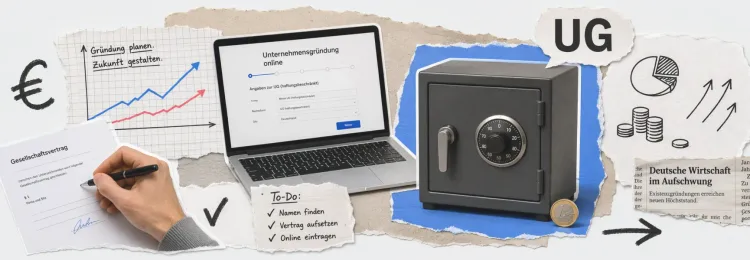
Founding a UG in Germany: A Comprehensive Guide

Set Up a GmbH in Germany: What You Need to Know

How to Start a Holding Company in Germany

How Much Does a GmbH Cost in Germany? Full Breakdown

How to Register a Business in Hamburg in 2026


